

The quest for Herbert Moore Pim
News Letter 21/11/1966
By Ralph Bossence
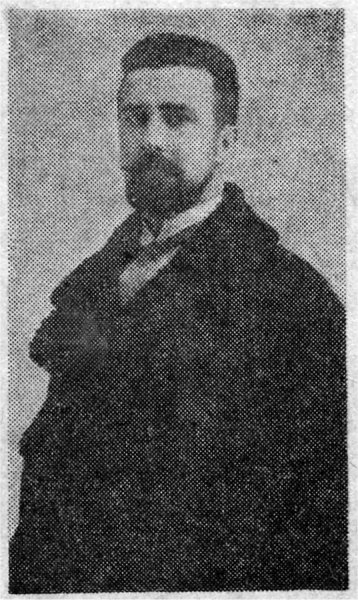 The quest for Herbert Moore Pim has been, for me, a fascinating
exploration of one of the byways of the Ulster political and literary
scene; now, through the kindness and co-operation of his son, Terence, I
am able to present a more rounded picture of this remarkable man.
The quest for Herbert Moore Pim has been, for me, a fascinating
exploration of one of the byways of the Ulster political and literary
scene; now, through the kindness and co-operation of his son, Terence, I
am able to present a more rounded picture of this remarkable man.
He had Royal blood in his veins. In an earlier article I mentioned the influence of one of his ancestors, the Quaker apologist, Robert Barclay, with James II. Barclay was, in fact, a cousin of James II, the kinship being established through Lord Darnley as well as a more direct line.
Herbert Moore Pim was born in 1883 at Granville Villas, University Street, the son of Robert Barclay Pim, who became director of the Alliance Assurance Company, and Caroline Pim, one of the Moores of Rathmines, Dublin, and later of Dromore.
Friends School
He was educated at Friends School, Lisburn, where his son remembers him saying, he teased a, girl called Sally Green very much. From there he went, to schools in Chester and Bedford. He married Miss Amy Vincent Mollan, one of seven daughters of W. S. Mollan, linen merchant and elder of Fisherwick Presbyterian Church, in June, 1903. The marriage was an unhappy one from the start.
Pim was always interested in politics, but his outlook underwent, some remarkable changes. He was first a Member of the. Junior Conservative Club in London, but joined the Roman Catholic Church in 1910 and later became a violent Irish Nationalist. In 1915 he lost a post with an insurance company because of his political activities, and in the same. year he was. imprisoned in Crumlin Road jail.
Plans for Rising
Terence with his father remembers a visit to Dublin in, the autumn of 1915, when he was seven and an extremely precocious child. They met: the O'Rahilly and Eoin M'Neill, leaders of the Irish Volunteers, and Pearse and Griffith. The small boy heard then of the plans for the 1916 Rising, and in Easter Week he was with his father in Tyrone with M'Cullough and Blythe, watching them supply armed bands of rebels. Before. the rebellion, he recalls, the house they lived in at 65 University Road, was stacked with arms and ammunition. His father carried a loaded revolver for years.
As a result of the defection he, received death threat letters and fled to London, where he was associated with Lord Alfred Douglas in the production of a scurrilous journal called "Plain English."
His subsequent career saw him become a naturalised Frenchman in order to secure a devorce that he might marry his mistress, Mile. Dussotour, in 1931, a Fascist in Italy and, finally, back in England, where he died in 1950, a staunch British Imperialist.
Watercolours
His writing began at the age of 17, when he launched the production, which was to go on for seven years, of "Pim's Annual" in manuscript and typed sheets, done on good coloured paper with gold edges and bound in quilted leather volumes. It consisted of nonsense verses, Jokes, articles and stories, all written by him except for two articles by James Leslie. He also did his own drawings in India ink and elaborately executed in water-colours.
The tone of the annual was Edward Lear, Harry Graham's "Ruthless Rhymes for Heartless Homes" and Saki. Terence recalls "Henry James drowned in his golden bowl" and much sadistic Edwardian gallows humour-the precursor of the sick joke. There was, for instance, a picture of a laundress wringing her hands," which were going through a mangle with the blood pouring from them.
In charming contrast were these nonsense verses: "The captain was the last to leave, he had a birdcage up his sleeve, the birdcage had three linnets in it, which sang a Marseillaise a minute."
The tale Pim liked best was of a man with a terrible past who tried to get rid of it, sent it to a laundry and got it back dyed a hideous yellow," so the old man never warmed his toes again."
Time of paradox
When he was 19 Pim was a member of the Y.M.C.A in which W. S. Mollan was also prominent, and wrote volumes of manuscript, with diagrams, about being " saved," and roads to Heaven and Hell. At the same time in his annuals he made fun of Roman Catholicism; as he "drifted to Rome" he turned his satire on Protestantism.
His first published writings are untraceable, but his son recalls that they were all written under pen names and included pious effusions for one firm and "blue" novels for another. These were imitations of Charles Garvice's Ranger Gull books.
From the age of three Terence had his father's works read to him. At five he read them himself. The first of the printed books he knew was " A Vampire of Souls."
He told his father that it was very banal- "a pale echo of a Danish work called Letters from Hell." Pim's Hell was paved with good intentions and there were picture stories the child Terence declared were no better than temperance lantern slides.
Next there were several novels, with veiled references to his marriage and his mother's people -- full of the half truths which, Pim boasted, did more damage than direct lies. Their titles were usually Biblical quotations, one of them "The Woman Thou Gavest Me."
Then came many articles, poems, detective stories and fairy tales, some unpublished but kept for future use. Not a few turned up later in "The Irishman", which Pim edited for Arthur Griffith during the Sinn Fein founder's imprisonment.
But the bulk of his published work was still to be written. Of that, more toe morrow.
The literary influences which moulded the work of Herbert Moore Pim
were strangely mixed -- on the one side, Dostoyevsky, Plato and Thomas A.
Kempis, on the other Marie Corelli, Hall Caine and Guy Boothby.
With a conventional admiration for Shakespeare, Wordsworth and Tennyson thrown in, his range in authors was as wide as his political interests, although there were many gaps in his reading.
When he and Lord Alfred Douglas were associated with the product ion of " Plain English " in London, their carousing left them little time for reading anything outside each other's work.
On one occasion Pim and Douglas and a journalist called Crosland came to blows after an argument about which of them had written the best. sonnet - Pin would admit only one rival to himself and that was Shakespeare,
Anti Semitic
"Plain English " was a polemical publication with a strong anti-Semitic line - and was sued for libel in a celebrated case in which Winston Churchill was involved--an alleged wartime plot by Jewish bankers had been " uncovered" by the magazine.
Douglas was also the initiator of many actions and once secured damages for an obituary of himself, having spread a report that he was dead.
Outside politics and journalism, Pint was most prolific between 1910 and 1920. "The Man with Thirty Lives" was an adventure romance of the "I have lived before" kind - a mixture of Boothby and Chesterton.
"The Pessimist", which he considered his master-piece, was written under the name of "A. Newman"-because, as he told his son, he was a new man when he was converted to Roman Catholicism. "This made me wince," Terence recalls. It had a strongly nihilistic theme.
"Unknown Immortals", a gallery of Belfast characters, has already been noted in this column, and about the same time two folders of poems appeared. His best verse can be found in "Songs from an Ulster Valley", simple unaffected poems which. revealed a love for his native Province.
In the same year that these were published, Short History of Celtic Philosophy" appeared. Other works included "The Ulster Volunteer," "Tracts for the Times", "Nationality" and, when. he had soured on Irish Nationalism, "Adventures in the Land of Sinn Fein" and " Unconquerable Ulster, for which Sir Edward Carson wrote a foreword.
Innumerable articles
Innumerable articles were written by him in "Plain English" and its successor, "Plain Speech,`' until these publications collapsed and Douglas went to prison. In 1926 Pim collected poems written from 1918 to 1920 under the title "New Poems", but they lacked the freshness of "Songs from an Ulster Valley".
A strange pamphlet concerning Marie Stopes and Roy Campbell" Two Salmon and Leviathan" and a novel, "French Love" were the only works published after his divorce. The novel had thinly disguised portraits of his first, wife and one of his mistresses-or rather a composite picture of several. It, also dealt with his spying activities during the troubles.
Pim's undoubted talents were dissipated by his way of life. He was an egotist, a man of violent temper and fickle both in his romantic and political attachments. He had an obsession for the Mona Lisa, and most of his women were chosen for their resemblance to her.
When he died in May, 1950, the "Irish Times" published a long obituary by an associate of his rebel days, which reflected the opinion of an apostate held by one still loyal to the cause. It drew a defence of Pim from Aodh de Blacam which was fulsome in its praise.
Pim was an Ulsterman about whom it was easy, to feel strongly, one way or the other.
